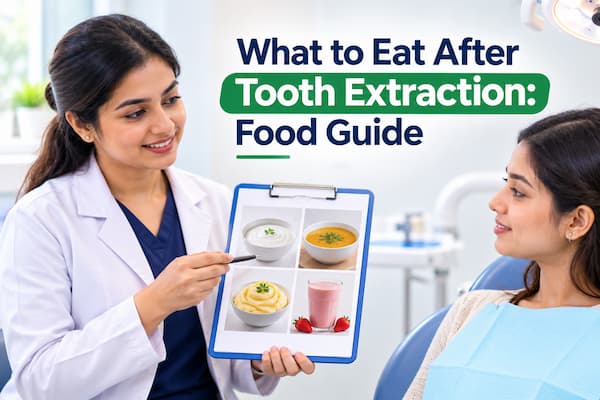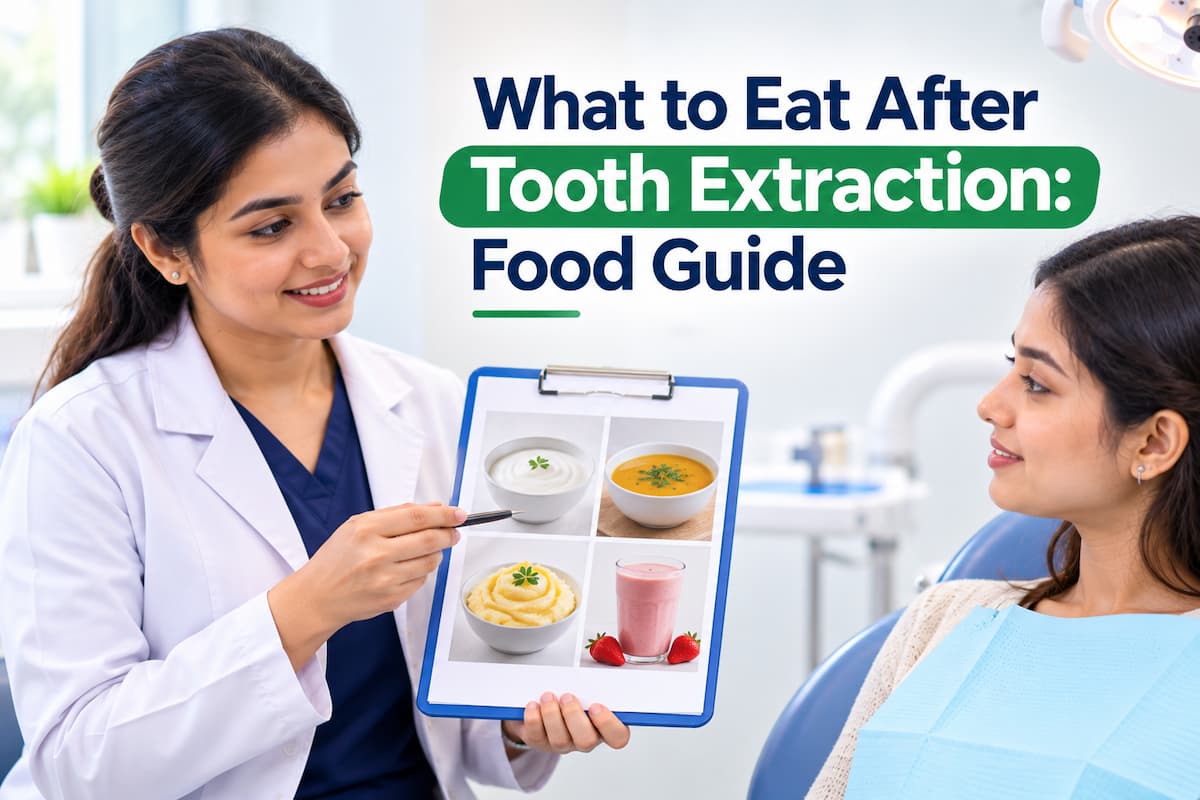
Quick answer: Wait until the numbness wears off, usually 2 to 3 hours, then eat soft, cool food on the other side of your mouth: doi, khichdi, dal, mashed potato or a soft egg. For the first two days skip anything hot, hard or spicy, and do not use a straw. Most people are back to normal food in about a week.
The tooth is out, there is a cotton roll in your mouth, and somewhere on the way home you start wondering what you can actually eat tonight. What you eat in the first few days decides how smoothly the gap heals, so it is worth getting right. This guide picks up where your tooth extraction in Kolkata appointment ends, with a day-by-day plan built around food you already have at home.
All of it comes down to one thing. After a tooth comes out, a blood clot forms in the empty space it leaves (the socket). That clot is the start of healing. Most food rules exist to stop it from being washed out, sucked out or burnt.
Table of Contents
- The First 24 Hours: Protect the Blood Clot
- Safe Foods After Tooth Extraction
- Foods and Drinks to Avoid
- Day-by-Day Food Guide
- After Wisdom Tooth Removal: What Changes
- Brushing and Rinsing While You Heal
- Dry Socket: Signs to Watch For
- Replacing the Missing Tooth
- Conclusion
- About the Author
- Frequently Asked Questions
- References
The First 24 Hours: Protect the Blood Clot
The first day matters more than the rest of the week put together. These are the rules for it:
- Keep biting firmly on the gauze for 30 to 45 minutes after you leave the chair
- Do not eat until the numbness has fully gone, usually 2 to 3 hours. A numb cheek or tongue is easy to bite without feeling it
- Chew on the other side of your mouth
- Keep food and drinks cool or lukewarm. A numb mouth can scald without you feeling it
- Do not drink through a straw. The suction can pull the clot out
- Do not rinse your mouth or spit on the first day. Swallow gently instead
- Do not smoke or use gutkha or khaini for at least 72 hours
A little blood mixed with saliva on the first day is normal. If the socket starts bleeding again, fold a clean piece of gauze or cotton, place it over the socket, and bite down firmly for 30 minutes.
Safe Foods After Tooth Extraction
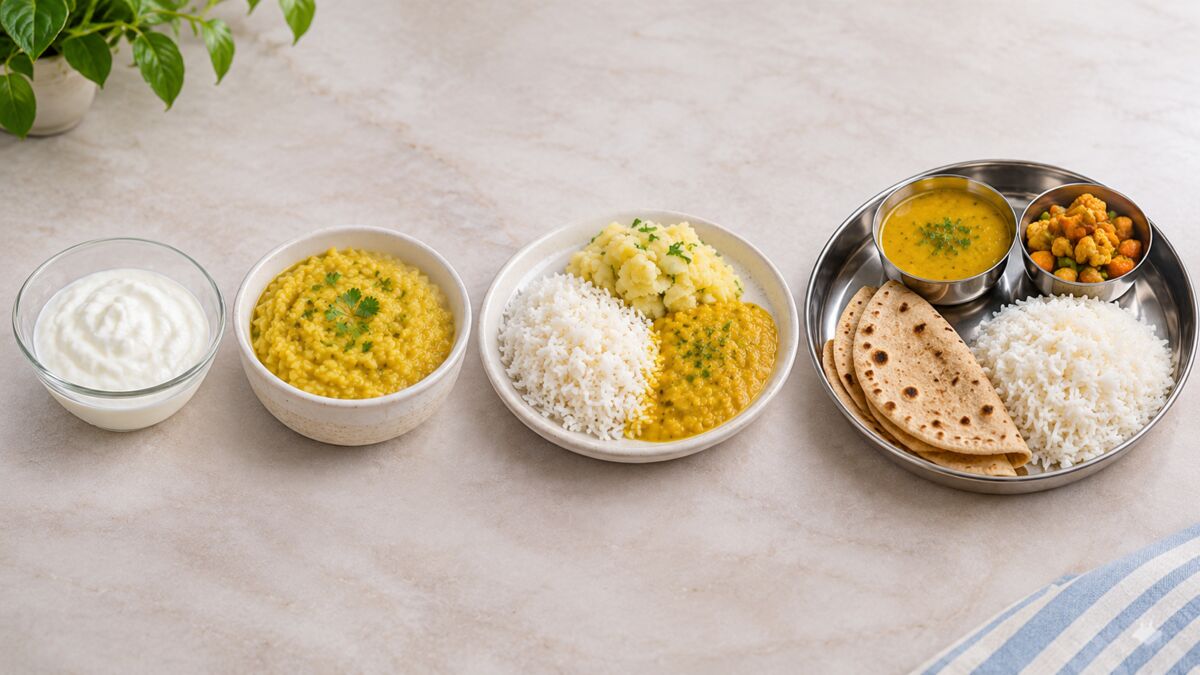
You do not need special food. Most Bengali kitchens already have everything on this list. The test is simple: if you can mash it with a spoon and it is not hot, it is usually fine.
| Food | When | Tip |
|---|---|---|
| Doi (curd), plain or lightly sweetened | From day 1 | Cool and soothing. Eat it with a spoon, not through a straw |
| Khichdi, cooked soft | From day 1, lukewarm | Cook it a little more watery than usual and skip whole spices |
| Dal | From day 1, lukewarm | Mild tadka only for the first two days |
| Aloo seddho (mashed potato) | From day 1 | Add a little ghee or butter, go easy on mustard oil and green chilli |
| Soft boiled or scrambled egg | From day 1, once cooled | Good protein when you cannot chew much |
| Suji (semolina) kheer or upma | From day 1, lukewarm | Keep upma soft and skip the peanuts |
| Banana, mashed papaya | From day 1 | Mash with a fork rather than biting into the fruit |
| Cold milk, lassi, plain ice cream | From day 1 | Drink from a glass. Ice cream without nuts, chips or a cone |
| Soft rice with dal or a mild jhol | From day 2 | Mash it well and eat on the other side, because rice grains can lodge in the socket |
| Boneless fish or soft chicken in a mild stew | From day 3 | Pick fish without small bones until the socket has closed |

Foods and Drinks to Avoid
Some of the city's favourite food is the worst choice this week. Crunchy snacks break into sharp pieces that end up in the socket, and spice stings an open wound.
| Avoid | For how long | Why |
|---|---|---|
| Muri, chanachur, chips, telebhaja, biscuits | About a week | Hard, crumbly pieces get stuck in the socket |
| Puchka, jhalmuri, spicy curries | At least 2 days | Spice and sour water irritate the wound |
| Hot cha, coffee, hot soup | First 24 hours | A numb mouth scalds easily. Let it cool to lukewarm |
| Fish with small bones, tough meat | Until the socket closes, about a week | Bones can poke the wound and tough meat needs hard chewing |
| Nuts, seeds, popcorn | About a week | Small pieces lodge in the socket |
| Alcohol | At least 24 to 48 hours, and while on prescribed medicines | It can raise the risk of infection in the wound |
| Straws of any kind | First few days | Suction pulls out the clot |
Smoking is not food, but it belongs at the top of this list. It is one of the biggest risk factors for losing the clot, which is why the 72-hour rule matters so much.
Day-by-Day Food Guide
| Time | What is happening | What to eat |
|---|---|---|
| Day 1 | The clot is forming in the socket | Cool and soft only: doi, cold milk, banana, plain ice cream, then lukewarm khichdi or dal by evening |
| Day 2 to 3 | Swelling peaks, then starts to settle | Soft and lukewarm: khichdi, mashed rice with dal, aloo seddho, eggs, suji |
| Day 4 to 7 | Gum starts closing over the socket | Semi-soft food: soft roti soaked in dal, boneless fish, soft paneer, cooked vegetables |
| After 1 week | Gum has mostly closed | Normal food, slowly. Leave the hardest and crunchiest items for last |
This timeline is for a simple extraction. If your tooth needed surgery to come out, or stitches were placed, follow the timeline your dentist gives you.
After Wisdom Tooth Removal: What Changes
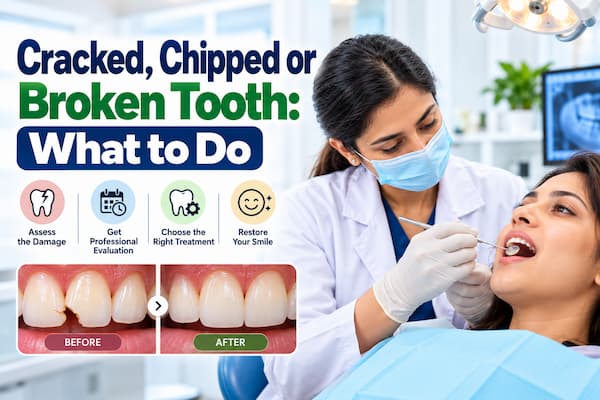
A wisdom tooth, especially a lower one that was stuck under the gum or bone (impacted), usually needs a small surgery. Recovery takes longer. Swelling is normal, and opening your mouth wide can be hard for a few days, so plan to stay on soft food for longer than the table above suggests.
Cut food into small pieces, eat slowly, and use a teaspoon rather than a big spoon while your jaw is stiff. If you are still deciding whether the tooth needs to come out, read when wisdom tooth removal is actually needed. Surgical removals are covered on our oral surgery in Kolkata page.
Brushing and Rinsing While You Heal
Food left around the socket is one of the main reasons it gets sore, so keeping your mouth clean is part of eating right.
- Brush your other teeth normally from the next day, and go gently near the socket
- From day 2, rinse gently with warm salt water after meals: one teaspoon of salt in a cup of warm water
- Let the water fall out of your mouth instead of spitting hard
- Do not poke the socket with your tongue, a finger or a toothpick
Dry Socket: Signs to Watch For
A dry socket (alveolar osteitis) happens when the clot is lost too early and the bone underneath is left uncovered. It is not common after a routine extraction, where studies put it at under 5 percent, but it is noticeably more common after a stuck lower wisdom tooth is removed.
The pattern is easy to spot. The pain settles for a day or two as expected, then comes back sharply, often spreading towards the ear on the same side, and ordinary painkillers do not help much. There may be a bad taste, or you may see an empty hole where the clot should be. Do not wait this out. See your dentist the same day, because it is treated quickly with a medicated dressing. Our tooth extraction page explains what to watch for in more detail.
Replacing the Missing Tooth
Once the gum closes, the bone underneath keeps filling in for about 6 to 8 weeks. That is usually the right time to plan a replacement if the gap shows or affects your chewing. Our dental implant cost guide and denture cost guide lay out the options and their starting prices.
Planning a Tooth Extraction?
See the types of extraction, starting prices and the full recovery timeline at Teeth Care.
View Tooth Extraction DetailsConclusion
For the first day, eat cool, soft food on the other side of your mouth and keep straws, hot cha and cigarettes away. From day two, warm soft meals like khichdi, mashed rice and dal are fine, and by the end of the week most people are eating normally again. The crunchy snacks wait until last.
If you had a root canal rather than an extraction, the rules are different, and our guide on what to eat after a root canal covers them.
About the Author
Dr. Arimeeta Chakraverty is an oral and maxillofacial surgeon and one of the chief dentists at Teeth Care Multispeciality Dental Clinic. She completed her B.D.S. at MGV KBH Dental College & Hospital (Maharashtra University of Health Sciences) and her M.D.S. in Oral and Maxillofacial Surgery at S.R.M. Dental College & Hospital, Chennai. She writes on oral surgery, extractions and gum health.
Frequently Asked Questions
Can I drink tea after tooth extraction?
Yes, but let it cool to lukewarm for the first 24 hours, and drink it from a cup, not through a straw.
When can I eat rice after tooth extraction?
From day 2, as long as it is soft, well mashed and eaten on the other side of your mouth.
Can I eat eggs after tooth extraction?
Yes. Soft boiled or scrambled eggs are fine from the first day once they have cooled.
Can I eat fish after tooth extraction?
Boneless fish in a mild jhol is fine from about day 3. Avoid fish with small bones until the socket closes.
Can I drink cold water or eat ice cream after tooth extraction?
Yes. Cold water and plain ice cream are soothing on the first day. Skip cones, nuts and straws.
When can I eat normally after tooth extraction?
Most people are back to normal food in about a week. A wisdom tooth surgery can take longer.