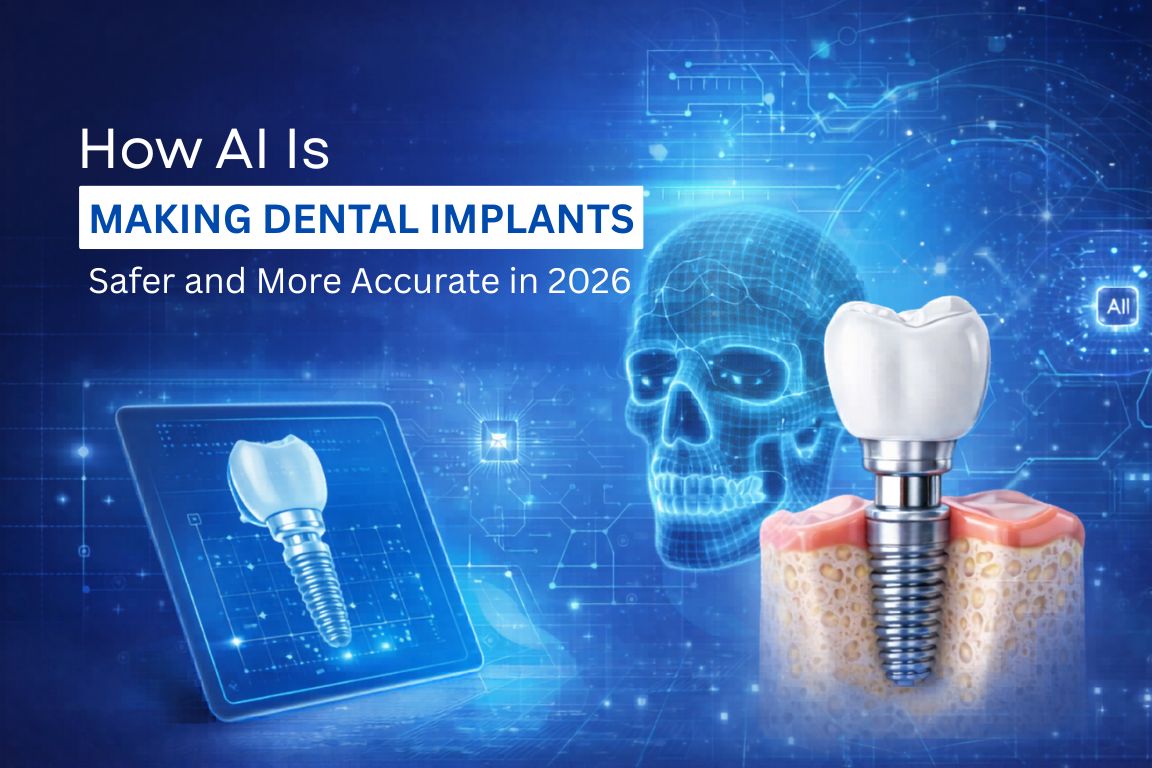
Dental implants have long been considered one of the most reliable solutions for replacing missing teeth. But in 2026, the technology behind implant dentistry is evolving rapidly. One of the biggest innovations transforming this field is Artificial Intelligence (AI).
Many patients are surprised to learn that today, advanced software and even robotic assistance may help guide the placement of dental implants. These systems analyze scans, predict implant positioning, and assist dentists during surgery with remarkable precision. This is why AI dental implants 2026 are becoming one of the most significant advancements in modern dentistry.
The integration of AI in implant dentistry, digital imaging, and computer-guided implant placement is reshaping the way implant treatments are planned and performed. These technologies allow dentists to analyze complex data, minimize surgical risks, and improve long-term treatment outcomes.
For patients, this means safer procedures, better implant positioning, and faster recovery times.
In this guide from Teeth Care Multispeciality Dental Clinic, we explain how AI-guided dental surgery, robotic assistance, and advanced dental implant accuracy technology are transforming dental implants and improving patient safety in 2026.
If you are new to implants and want to understand the basics first, you can read our guide on What Are Dental Implants and Why Do We Need Them.
What AI Actually Does in Dental Implant Treatment
Artificial Intelligence does not replace dentists. Instead, it works as a powerful support tool that enhances diagnostic accuracy and surgical precision.
Modern AI dental treatment planning systems analyze CBCT scans, digital X-rays, bone density measurements, and patient health data. Using this information, AI software can generate highly accurate implant treatment plans.
Traditionally, implant planning relied heavily on a dentist’s manual interpretation of imaging scans. While experienced dentists can achieve excellent results, traditional planning methods still depend on human judgment.
With AI in implant dentistry, software algorithms analyze thousands of data points from imaging scans to determine the safest and most effective implant placement.
AI technology now supports nearly every stage of implant treatment:
- Automated analysis of CBCT scans and X-rays
- Identification of bone density and anatomical structures
- Digital treatment planning with 3D models
- Computer-guided implant placement during surgery
- Predictive modeling of implant success
- Post-treatment monitoring and long-term follow-up
AI-powered systems can also automatically detect important anatomical landmarks such as nerves, sinus cavities, and variations in bone structure. This allows dentists to avoid critical structures and perform implant surgery with greater confidence.
To understand how implants restore missing teeth and function like natural tooth roots, you can explore our page on Dental Implants in Kolkata.
Smarter Treatment Planning
One of the most important steps in dental implant treatment is the planning phase. Even small placement errors can affect implant stability and long-term success.
Today, dentists use 3D CBCT imaging combined with AI dental treatment planning software to build highly detailed digital models of a patient’s jaw.
These digital models allow dentists to visualize:
- Bone thickness and density
- Jawbone structure
- Nerve pathways
- Sinus cavities
- Ideal implant positioning
AI software analyzes these scans and generates precise placement maps that guide implant surgery.
These systems also simulate how the implant will interact with surrounding bone and tissue over time. This helps dentists predict how well the implant will integrate with the jawbone.
Another major advantage of computer-guided implant placement is the reduction of human error during treatment planning.
Instead of relying only on manual measurements, AI-generated planning software calculates optimal implant positioning based on bone quality, bite alignment, and prosthetic design.
This predictive analysis significantly improves treatment precision and overall implant success rates.
Precision During Surgery: Robotic and AI-Guided Systems
After treatment planning is complete, AI technology can also assist during the surgical phase.
Advanced implant clinics now use AI-guided dental surgery and robotic dental implant surgery systems to ensure extremely accurate implant placement.
In robotic implant procedures, a robotic arm helps guide the surgical instruments according to the digital treatment plan created during the planning stage.
The dentist remains fully in control of the procedure, but the robotic system ensures that the implant is placed exactly according to the planned angle, depth, and position.
Clinical studies show that robotic-assisted implant placement can achieve positional accuracy above 98%, significantly reducing surgical errors.
Early clinical trials have also reported implant placement deviations of less than 1 millimeter compared with the digital surgical plan.
Another advantage of AI dental implant accuracy technology is improved surgical efficiency. Robotic guidance systems can reduce surgical time by 15–20%, making procedures faster and more comfortable for patients.
These technologies are particularly useful in complex procedures such as Full Mouth Dental Implants in Kolkata, where precise implant positioning is critical for restoring an entire set of teeth.
Predicting Implant Success Before It Happens
One of the most exciting developments in AI dental implants 2026 is the ability to predict implant outcomes before the procedure even begins.
AI-powered risk assessment systems analyze factors such as:
- Bone density
- Implant size and design
- Surgical drilling protocols
- Patient health conditions
- Bite force and jaw structure
Based on these variables, AI algorithms can estimate the probability of implant success or failure.
Research shows that AI systems can predict the primary stability of dental implants with an accuracy of around 93.7%.
This predictive capability allows dentists to modify treatment plans before surgery to reduce risks and improve implant success rates.
Patients with complex dental conditions such as bone loss, diabetes, or previous implant failures can benefit significantly from AI-assisted planning.
Peri-Implant Monitoring and Long-Term Care
Artificial intelligence is also improving post-surgical monitoring and long-term implant care.
After implant placement, AI-powered software can analyze follow-up X-rays and CBCT scans to monitor bone levels around the implant.
These systems can detect early signs of bone loss or implant complications before symptoms appear.
During surgery, AI navigation systems guide tools in real time and adjust for slight jaw movements. This allows implants to be placed within a fraction of a millimeter of the planned position.
Studies suggest AI-guided systems can shorten surgical time by up to 30%, improving efficiency and reducing patient discomfort.
Some advanced platforms also provide automated follow-up monitoring by comparing new scans with previous images to detect early implant issues.
Future developments may include smart dental implants equipped with micro-sensors capable of tracking implant stability and gum health.
To ensure long-term implant success, patients should also follow proper care instructions after surgery. Our guide on Aftercare of Dental Implant Procedure explains how to maintain implants and prevent complications.
What This Means for Patients
The adoption of AI in implant dentistry offers several benefits that directly impact patient safety and treatment outcomes.
AI-assisted implant procedures can provide:
- More precise implant placement
- Reduced surgical complications
- Shorter surgical time
- Faster healing and recovery
- Improved long-term implant success
Studies show that AI-guided dental surgery can achieve placement accuracy above 94% and precision above 87%, significantly reducing deviations from the planned implant position. Technology is only part of the shift, as our look at why more patients are choosing implants in 2026 explains.
These technologies also allow dentists to personalize treatment plans based on each patient’s anatomy and health conditions.
If you are searching for expert implant care, you can visit our page on Best Dental Clinic Near Me in Kolkata to locate the nearest branch of Teeth Care Multispeciality Dental Clinic.
Before choosing implant treatment, you may also consider asking your dentist:
- Do you use AI-assisted implant planning?
- Is your implant surgery computer-guided?
- Do you use robotic assistance for implant placement?
These technologies can significantly improve the safety and accuracy of implant procedures.
Frequently Asked Questions
Is AI-guided dental implant surgery safe?
Yes. AI-guided dental surgery uses advanced planning software and real-time navigation systems to improve implant placement accuracy and reduce surgical complications.
Does AI replace the dentist during implant surgery?
No. AI tools assist dentists by analyzing imaging data and guiding surgical instruments, but the dentist remains responsible for diagnosis, planning, and surgical decisions.
How accurate are AI dental implant systems?
Modern dental implant accuracy technology can achieve placement accuracy above 94%, while robotic-assisted systems can reach positional accuracy of over 98%.
Are AI dental implants more expensive?
In some cases, procedures involving robotic dental implant surgery may cost slightly more due to advanced technology. However, the improved precision can reduce complications and additional procedures.
To learn more about pricing, you can read our guide on Affordable Dental Implants: Costs, Procedure and Recovery Tips.
Which clinics offer AI-assisted implants?
Many modern dental clinics now offer AI dental implant planning near me services using digital imaging and guided surgery systems.
At Teeth Care Multispeciality Dental Clinic, advanced imaging technology and digital planning tools are used to improve implant precision and treatment outcomes.
If you want to see real patient outcomes, you can explore our Dental Implant Before and After Gallery.
Final Thoughts
Artificial intelligence is rapidly transforming modern implant dentistry.
With the rise of AI dental implants 2026, dentists can analyze scans more accurately, plan treatments more precisely, and perform implant surgeries with higher predictability than ever before.
By combining AI in implant dentistry, computer-guided implant placement, and robotic dental implant surgery, dentists can achieve exceptional levels of surgical precision. AI planning is one part of a wider shift, described in digital dentistry in Kolkata.
For patients, this means safer procedures, fewer complications, and faster recovery.
If you are considering dental implants and want to learn whether AI-guided dental surgery is right for you, schedule a consultation with Teeth Care Multispeciality Dental Clinic.
Our dental specialists can evaluate your oral health and recommend the most advanced implant solutions for restoring your smile.