Dental implants are one of the most reliable solutions for replacing missing teeth. However, one of the most important decisions in implant treatment is not just the procedure itself but the material used for the implant.
For decades, titanium implants have been the traditional choice in dentistry. Today, however, many patients are exploring alternatives such as zirconia dental implants 2026, especially those looking for metal-free dental implants or a more natural-looking solution.
This growing interest has sparked the comparison of zirconia vs titanium dental implants.
Both materials are safe, biocompatible, and widely used in modern implant dentistry. However, they differ in areas such as aesthetics, durability, cost, and long-term research. Understanding these differences can help you choose the best dental implant material for your smile from the dentists of the best dental implant clinic in Kolkata.
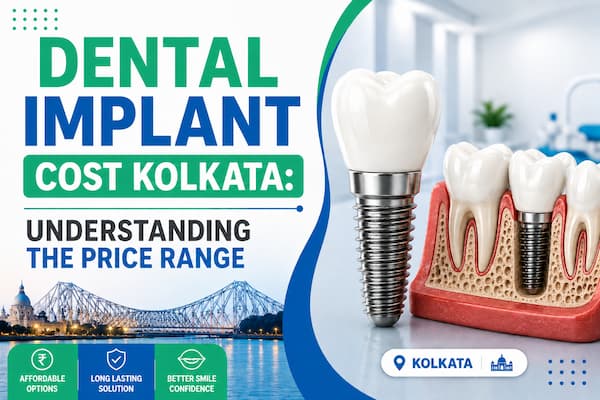
If you are considering implants, you may also want to understand treatment costs. You can read our detailed guide on Dental Implant Cost in Kolkata to learn how pricing varies based on implant materials and treatment complexity.
In this guide from Teeth Care Multispeciality Dental Clinic, we will compare titanium implant vs ceramic implant systems and help you determine which option may work best for your dental needs.
What Are Titanium Dental Implants?
Titanium implants have been used in dentistry since the 1960s and are still the most widely used implant systems worldwide.
Their success is largely due to a biological process called osseointegration, where the implant naturally fuses with the jawbone. This allows the implant to act as an artificial tooth root and support a crown, bridge, or denture.
Research consistently shows that the titanium implant success rate is extremely high. Studies indicate survival rates of approximately 97.2% at five years and about 95.2% after ten years, making titanium implants one of the most predictable dental treatments available.
Titanium implants are made from medical-grade alloys designed to provide both strength and flexibility. This flexibility allows the implant to withstand heavy chewing forces without fracturing.
Because of their durability, titanium implants are often recommended for:
- Replacement of molars and premolars
- Multiple missing teeth
- Full-arch restorations such as All-on-4 implants
- Complex implant cases requiring strong mechanical support
If you want to understand how the treatment is performed step by step, you can read our detailed guide on the Dental Implant Procedure in Kolkata.
When comparing a titanium implant vs ceramic implant, titanium still has the advantage of decades of long-term research supporting its safety and reliability.
What Are Zirconia Dental Implants?
Zirconia implants are a newer alternative to titanium implants. They are made from zirconium dioxide, a high-strength ceramic material widely used in modern dentistry.
Unlike titanium implants, zirconia implants are completely metal-free dental implants. This makes them appealing to patients who prefer ceramic materials or those seeking holistic dental implants.
In recent years, interest in zirconia dental implants 2026 has increased significantly as patients become more aware of metal-free treatment options.
One of the biggest advantages of zirconia implants is their appearance. Zirconia is naturally white, which helps the implant blend better with surrounding teeth and gums.
Zirconia implants are also highly biocompatible and are sometimes recommended as zirconia dental implants for metal allergy patients who may be sensitive to metal materials.
Another advantage is their smooth ceramic surface, which tends to accumulate less bacterial plaque compared to some metal surfaces.
Because of these benefits, zirconia implants are becoming an increasingly popular alternative to traditional titanium systems.
Zirconia vs Titanium Dental Implants: Key Differences
Understanding the key differences between these materials can help patients choose the most suitable implant solution.
Aesthetic Appearance
One of the biggest differences between zirconia and titanium implants is their color.
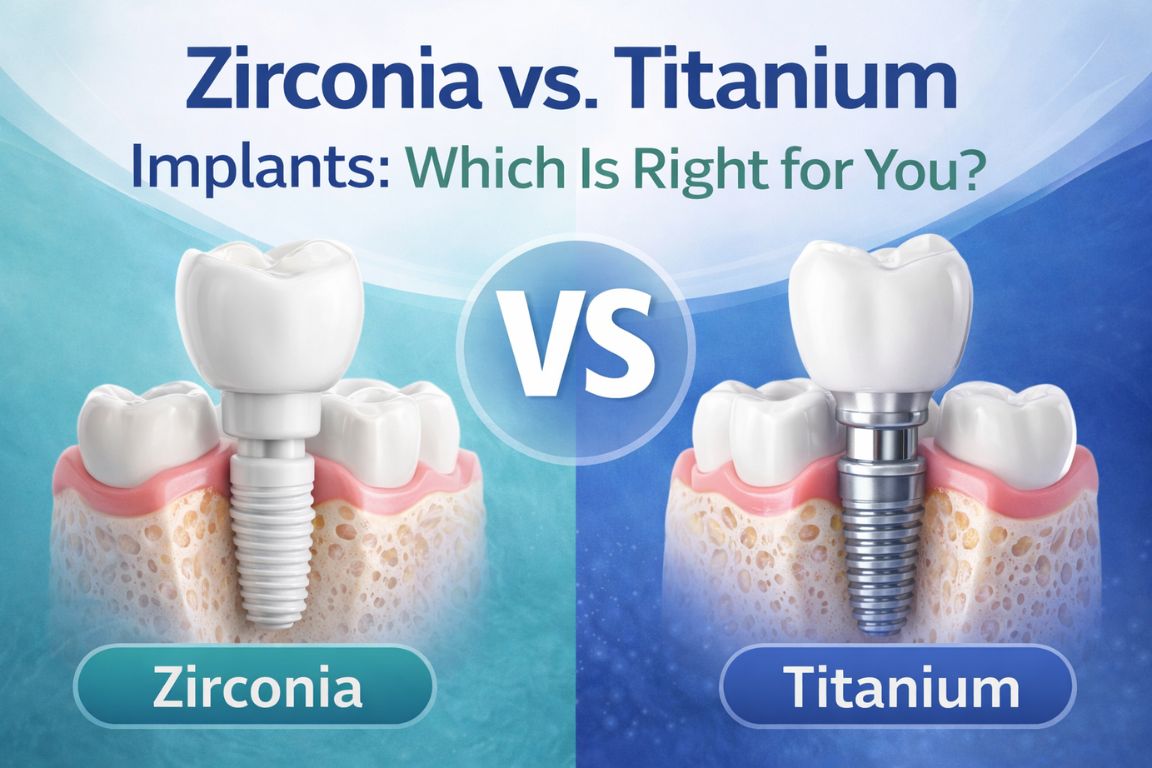
Zirconia implants are tooth-colored and blend naturally with surrounding teeth and gums. Because of this, zirconia is often considered the best dental implant material for front teeth.
Titanium implants are grey in color. In patients with thin gum tissue, the metal may sometimes create a faint grey shadow near the gum line.
For visible areas of the smile, zirconia implants often provide better aesthetics.
Strength and Durability
When comparing titanium implant vs ceramic implant, strength is an important factor.
Titanium implants have excellent tensile strength, reaching around 1,000 MPa, and they also have slight flexibility that helps absorb chewing forces.
Zirconia implants have strong compressive strength ranging between 1,200 and 1,500 MPa, but they are more rigid than titanium.
Because zirconia is less flexible, titanium implants are usually preferred in areas that experience stronger chewing forces, such as molars.
Biocompatibility and Allergies
Both titanium and zirconia implants are highly biocompatible.
However, a small percentage of people may experience sensitivity to metals. Research suggests titanium allergy affects about 0.6% of the population.
For these patients, dentists may recommend zirconia dental implants for metal allergy because they are ceramic and completely metal-free.
Currently, clinical literature reports no confirmed cases of zirconia hypersensitivity.
Osseointegration
Both implant materials integrate well with bone.
Studies comparing bone-to-implant contact show very similar results:
- Titanium implants: approximately 58.5% bone contact
- Zirconia implants: approximately 55.5% bone contact
Over time, these values improve as the implant bonds with surrounding bone.
This means both materials provide stable and reliable support for dental restorations.
Cost Difference
Another important factor is the zirconia vs titanium implant cost difference.
Zirconia implants typically cost 20–30% more than titanium implants. This is due to more complex manufacturing processes and limited implant systems available.
Zirconia Implant Pros and Cons
Understanding the zirconia implant pros and cons can help patients determine whether ceramic implants are suitable for their needs.
Advantages
- Completely metal-free dental implants
- Excellent aesthetics for visible teeth
- Suitable for patients seeking holistic dental implants
- May be recommended for zirconia dental implants for metal allergy
Limitations
- Slightly higher cost compared with titanium implants
- More rigid material compared with titanium
- Limited long-term clinical data compared with titanium systems
These ceramic dental implants pros and cons should always be discussed with your dentist before choosing an implant material.
When Zirconia Implants May Be the Better Choice
Zirconia implants are particularly useful in the aesthetic zone, especially for front teeth where appearance is critical.
Because zirconia is white, it blends naturally with surrounding teeth and gums and avoids the grey shadow sometimes associated with titanium implants.
For this reason, zirconia is often considered the best dental implant material for front teeth, particularly in patients with thin or translucent gum tissue.
They are also ideal for individuals who prefer metal-free dental implants or who prioritize holistic dentistry approaches.
When Titanium Implants May Be the Better Choice
Titanium implants are often recommended for cases that require maximum durability.
Because titanium is both strong and flexible, it performs well in areas with high chewing pressure such as molars.
Titanium implants are also commonly used for:
- Full-arch implant restorations
- Implant-supported dentures
- Multiple missing teeth
- Complex implant procedures
Today, many clinics also use advanced technologies such as AI Guided Dental Implants in Kolkata to improve placement accuracy and treatment outcomes.
The extensive research supporting the titanium implant success rate makes it one of the most predictable treatments in modern dentistry.
Are Zirconia Implants Better Than Titanium?
Many patients ask are zirconia implants better than titanium.
The answer depends on the clinical situation.
Zirconia implants offer excellent aesthetics and are attractive to patients seeking metal-free dental implants.
Titanium implants offer exceptional durability and decades of clinical research.
Therefore, when comparing zirconia vs titanium dental implants, the right choice depends on your dental anatomy, bite pressure, and cosmetic goals.
Which Dental Implant Lasts Longer: Zirconia or Titanium?
Another common question is which dental implant lasts longer zirconia or titanium.
Currently, titanium implants have the advantage of long-term research data spanning several decades.
Zirconia implants have shown promising results in short-term studies, but long-term data beyond ten years is still developing.
Both materials show strong success rates, and choosing the best dental implant material depends on individual treatment needs.
Is zirconia stronger than titanium for dental implants?
Zirconia implants have high compressive strength, but titanium implants offer greater flexibility and tensile strength. Because titanium absorbs chewing forces better, it is often preferred for molars and high-pressure areas.
Are zirconia implants safe long-term?
Yes. Zirconia implants are highly biocompatible and safe. However, titanium implants currently have more long-term research data available compared with zirconia systems.
Which implant material looks more natural?
Zirconia implants usually look more natural because they are tooth-colored and blend better with gum tissue. This is why zirconia is often considered the best dental implant material for front teeth.
Can zirconia implants be used if I have a metal allergy?
Yes. Dentists may recommend zirconia dental implants for metal allergy patients because they are completely metal-free.
Are metal-free implants more expensive?
Yes. The zirconia vs titanium implant cost difference usually ranges between 20–30%, with zirconia implants being slightly more expensive.
Final Thoughts
When comparing zirconia vs titanium dental implants, there is no universal solution.
Titanium implants offer unmatched durability and decades of clinical success. Zirconia implants provide excellent aesthetics and a metal-free alternative for patients seeking ceramic solutions.
Choosing the right implant material depends on factors such as:
- Tooth location
- Gum thickness
- Bone condition
- Budget and aesthetic goals
At Teeth Care Multispeciality Dental Clinic, our implant specialists carefully evaluate each patient to determine the most suitable treatment plan.
If you are considering dental implants and want expert advice on the best dental implant material for your smile, schedule a consultation with our dental team today.
Is zirconia stronger than titanium for dental implants?
Zirconia implants have high compressive strength, but titanium implants offer greater flexibility and tensile strength. Because titanium absorbs chewing forces better, it is often preferred for molars and high-pressure areas.
Are zirconia implants safe long-term?
Yes. Zirconia implants are highly biocompatible and safe. However, titanium implants currently have more long-term research data available compared with zirconia systems.
Which implant material looks more natural?
Zirconia implants usually look more natural because they are tooth-colored and blend better with gum tissue. This is why zirconia is often considered the best dental implant material for front teeth.
Can zirconia implants be used if I have a metal allergy?
Yes. Dentists may recommend zirconia dental implants for metal allergy patients because they are completely metal-free.
Are metal-free implants more expensive?
Yes. The zirconia vs titanium implant cost difference usually ranges between 20–30%, with zirconia implants being slightly more expensive.
Final Thoughts
When comparing zirconia vs titanium dental implants, there is no universal solution.
Titanium implants offer unmatched durability and decades of clinical success. Zirconia implants provide excellent aesthetics and a metal-free alternative for patients seeking ceramic solutions.
Choosing the right implant material depends on factors such as:
- Tooth location
- Gum thickness
- Bone condition
- Budget and aesthetic goals
At Teeth Care Multispeciality Dental Clinic, our implant specialists carefully evaluate each patient to determine the most suitable treatment plan.
If you are considering dental implants and want expert advice on the best dental implant material for your smile, schedule a consultation with our dental team today.